


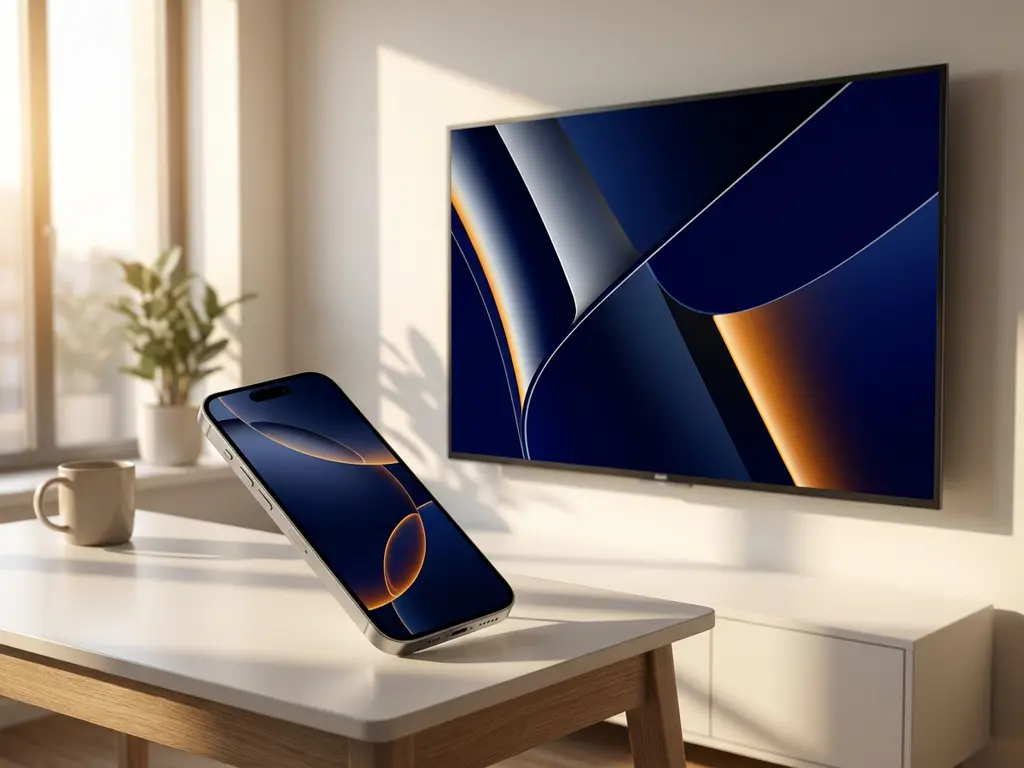
iPhone screen mirroring orientation issues can be incredibly frustrating when you’re trying to share content on your TV. One moment your screen looks perfect on your phone, and the next it’s sideways or upside down on your television. These orientation problems happen more often than you might think, and understanding why they occur is the first step to fixing them quickly.
Whether you’re trying to share photos with family or stream videos to your smart TV, orientation glitches can turn a simple mirroring session into a headache. The good news is that most iPhone screen mirroring orientation problems have straightforward solutions once you know what’s causing them.
What causes iPhone screen mirroring to display in the wrong orientation?
iPhone screen mirroring displays in the wrong orientation primarily due to mismatched screen rotation settings between your iPhone and the mirroring app, or because the TV doesn’t properly interpret your device’s orientation data during the wireless connection process.
Several factors contribute to this common issue. Your iPhone’s orientation lock might be enabled, preventing the screen from rotating naturally when you turn your device. When this happens, the mirroring app receives conflicting signals about how to display your content on the TV screen.
App-specific rotation settings also play a role. Some apps force landscape or portrait mode regardless of how you hold your iPhone. When these apps are mirrored to your TV, the orientation becomes locked in whatever mode the app requires, even if it doesn’t match your TV’s display format.
Network latency can cause timing issues in which your iPhone’s orientation changes faster than the mirroring connection can process. This creates a lag where the TV shows the previous orientation while your phone has already switched to a new position.
Why does my iPhone screen stay sideways when mirroring to TV?
Your iPhone screen stays sideways when mirroring because either your device’s orientation lock is activated in landscape mode, or the mirroring app launched while your phone was horizontal and hasn’t refreshed to match your current vertical position.
The most common culprit is the orientation lock feature. If you were watching a video in landscape mode and enabled orientation lock, your iPhone will maintain that sideways position even when you rotate the device upright. The mirroring connection simply displays whatever orientation your iPhone is currently locked into.
Some mirroring apps also cache the initial orientation when the connection starts. If you began mirroring while holding your iPhone horizontally, the app might continue displaying in landscape mode until you manually refresh the connection or restart the mirroring session.
Certain apps, such as video players or games, automatically force landscape orientation. When you mirror these apps, they’ll appear sideways on your TV regardless of how you hold your iPhone, because the app itself is designed to run in horizontal mode only.
How do you fix iPhone screen mirroring orientation problems?
Fix iPhone screen mirroring orientation problems by first checking your orientation lock in Control Center, then rotating your device to the desired position and restarting the mirroring connection to refresh the display settings.
Start by swiping down from the top-right corner of your iPhone to open Control Center. Look for the orientation lock icon, which looks like a circular arrow with a lock. If it’s highlighted or red, tap it to disable orientation lock. This allows your screen to rotate freely when you turn your device.
Next, hold your iPhone in the orientation you want to see on your TV. Rotate it to portrait mode for vertical content or landscape mode for horizontal viewing. Give it a moment to register the change before proceeding to the next step.
Stop your current mirroring session completely and restart it. In most screen mirroring apps, this means tapping “Stop Mirroring” or closing the connection, then selecting “Start Mirroring” again. This forces the app to detect your iPhone’s current orientation and match it on your TV screen.
If the problem persists, close the mirroring app entirely by swiping up from the bottom of your screen and swiping up on the app to close it. Reopen the app and establish a fresh mirroring connection with your iPhone in the correct orientation from the start.
What’s the difference between portrait and landscape mirroring on iPhone?
Portrait mirroring displays your iPhone screen vertically on the TV with black bars on the sides, while landscape mirroring shows your content horizontally across the full TV screen, matching the television’s natural widescreen format.
Portrait mode mirroring replicates your iPhone’s natural vertical orientation. When you mirror in portrait, your TV shows your phone screen as a tall rectangle in the center, with black space filling the left and right sides. This works well for apps designed for phone use, like social media, messaging, or reading apps.
Landscape mirroring rotates your iPhone content to fill your TV’s horizontal screen completely. This orientation eliminates the black side bars and makes better use of your television’s widescreen display. It’s ideal for watching videos, playing games, or viewing photos that benefit from the larger horizontal space.
The choice between portrait and landscape depends on your content and viewing preference. Photos and videos often look better in landscape mode because they can fill more of your TV screen. However, apps like Instagram, Twitter, or text-heavy content might be more readable in portrait orientation, even with the black bars on the sides.
Most modern screen mirroring solutions automatically detect your iPhone’s orientation and adjust the TV display accordingly. This means you can switch between portrait and landscape simply by rotating your device, and the mirrored image should follow your movement in real time. You can also enhance your setup with a universal remote control TV app for more convenient management of your devices. If you’re experiencing persistent issues with orientation detection, you might want to check the knowledge base for additional troubleshooting steps. For Mac users experiencing similar issues, the same principles apply when you mirror your Mac screen. If problems continue to persist, don’t hesitate to contact us for personalized support.