


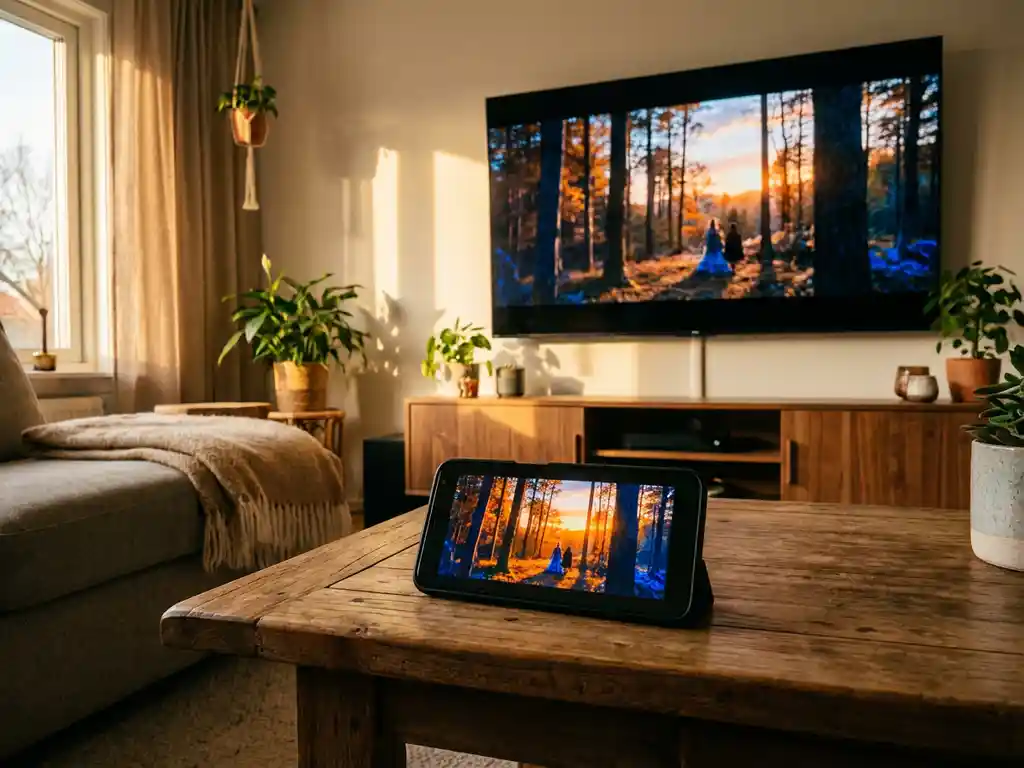
Color distortion during iPhone screen mirroring can turn your viewing experience from crystal clear to frustratingly washed out or oversaturated. Whether you’re trying to share photos with family or stream your favorite shows on the big screen, color issues can make everything look off.
Understanding what causes these color problems and how to fix them will help you get the most out of your iPhone screen mirroring experience. Let’s dive into the technical factors behind color distortion and explore practical solutions to restore accurate colors.
What causes color distortion when mirroring your iPhone screen?
Color distortion in iPhone screen mirroring typically occurs due to mismatched color profiles between your iPhone and TV, wireless signal compression, or incompatible display settings. Your iPhone uses the sRGB color space, while many TVs default to different color profiles that can shift how colors appear during wireless transmission.
The wireless transmission process itself introduces another layer of complexity. When your iPhone sends screen data wirelessly, the signal must be compressed and then decompressed by your TV or streaming device. This compression can alter color information, especially in areas with subtle color gradients or high detail.
Network interference also plays a significant role. If your Wi-Fi network is congested or experiencing interference from other devices, the data packets containing color information may be delayed or corrupted during transmission. This can result in color banding, pixelation, or overall color shifts that make your mirrored content look different from what appears on your iPhone screen.
Why does iPhone screen mirroring look washed out or oversaturated?
iPhone screen mirroring appears washed out or oversaturated because TVs often apply automatic picture enhancement features that weren’t designed for mobile device content. These TV settings boost contrast and saturation for broadcast television, but they can make iPhone content look unnatural and overly processed.
Your TV’s default picture mode likely includes dynamic contrast, color enhancement, and sharpening filters that work well for cable TV but create problems with iPhone mirroring. When these features encounter the already optimized display output from your iPhone, they can push colors beyond their natural range, creating an oversaturated appearance.
Conversely, some TVs may interpret the iPhone’s color signals as too bright and automatically dim them, resulting in washed-out colors. This happens when there’s a mismatch between your iPhone’s brightness calibration and your TV’s expected input levels. The TV essentially “corrects” colors that don’t need correction, leading to dull, lifeless images.
How do wireless transmission methods affect iPhone mirroring color quality?
Wireless transmission methods significantly impact iPhone mirroring color quality through compression algorithms and bandwidth limitations. AirPlay uses advanced compression to reduce file sizes for faster transmission, but this process can eliminate subtle color details and create artifacts in areas with complex color gradients.
The available bandwidth on your Wi-Fi network directly affects how much color data can be transmitted without compression. When bandwidth is limited, the mirroring system prioritizes maintaining smooth playback over color accuracy, often reducing the bit depth of color information. This results in fewer available colors and can create visible color banding in smooth gradients like skies or skin tones.
Different wireless protocols handle color differently. While AirPlay maintains relatively good color fidelity, third-party screen mirroring apps may use more aggressive compression to ensure compatibility across various TV brands. The trade-off between universal compatibility and color accuracy means some wireless transmission methods sacrifice color precision for broader device support.
What TV settings should you adjust to fix iPhone mirroring color issues?
To fix iPhone mirroring color issues, disable your TV’s picture enhancement features and switch to Movie or Cinema mode, which provides the most accurate color reproduction. Turn off dynamic contrast, color enhancement, noise reduction, and any automatic picture adjustment features that can interfere with your iPhone’s optimized display output.
Adjust your TV’s color temperature setting to “Warm” or “6500K” to match your iPhone’s display characteristics more closely. Many TVs default to “Cool” color temperatures that add blue tints to content, making iPhone mirroring appear cold and unnatural. The warm setting provides better color balance for mobile device content.
Set your TV’s HDMI black level to “Low” or “Limited” if you’re using a universal remote control TV app for mirroring. This ensures the TV correctly interprets the color range from your iPhone. Also, reduce the backlight and contrast settings if colors appear blown out or overly bright during mirroring sessions.
How can you improve iPhone screen mirroring color accuracy?
Improve iPhone screen mirroring color accuracy by ensuring both your iPhone and TV are connected to a strong, dedicated Wi-Fi network with minimal interference. Use the 5 GHz band if available, as it typically provides more bandwidth and less congestion than 2.4 GHz networks, allowing for better color data transmission.
Position your iPhone and TV closer to your Wi-Fi router to maintain a strong signal throughout your mirroring session. Weak signals force the system to use more compression, which degrades color quality. If possible, use a wired connection for your TV or streaming device to eliminate one potential source of signal degradation.
Consider using dedicated screen mirroring apps that prioritize color accuracy over universal compatibility. While built-in AirPlay works well, specialized mirroring applications often provide more control over compression settings and color handling, allowing you to fine-tune the balance between performance and visual quality based on your specific needs.